
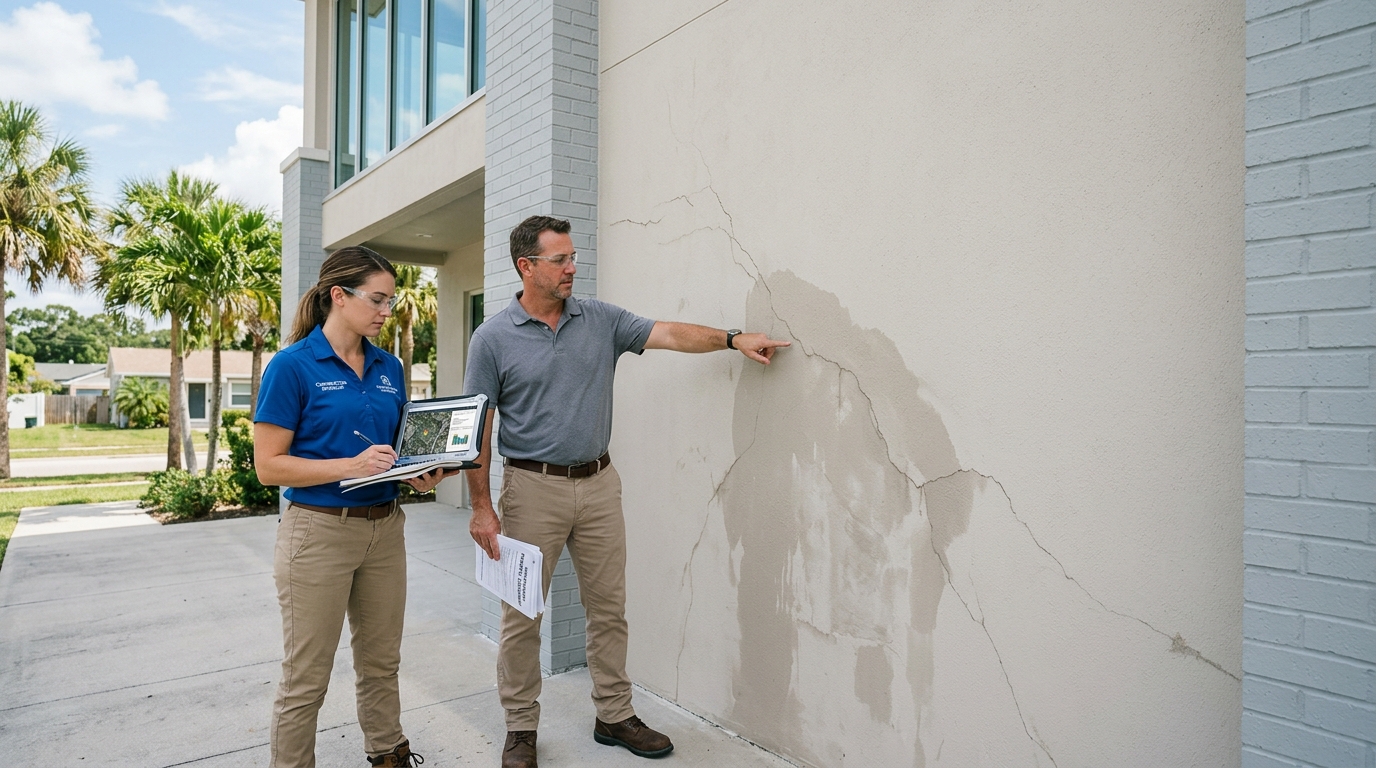
Construction Defect Claims in Florida: What Tampa Property Owners Should Document
Possible construction defects deserve prompt, careful attention. Property owners in Tampa and throughout the Tampa Bay area can protect important information by documenting conditions, preserving project records, and seeking timely guidance before taking steps that could make an evaluation more difficult. Because construction defect claims in Florida may involve notice requirements and other deadlines, an early, organized response can be valuable.
Water stains, cracked stucco, roof leaks, uneven floors, and code-related concerns may have many potential causes. This article provides general educational information, not individualized legal advice or a prediction about any particular outcome.
Begin With Clear, Dated Documentation
When a possible defect becomes visible, photograph and date the condition as soon as practical. Take wide photographs that show the affected area in context, along with close-up images that capture details such as cracks, staining, damaged finishes, displaced materials, or visible moisture.
Continue documenting changes over time. For example, a ceiling stain that expands after rainfall, recurring water intrusion near windows, or cracking that progresses across an exterior wall may be important to record. Written notes can help identify when the issue was first observed, where it appeared, weather conditions when relevant, and whether the problem has recurred.
For commercial properties, a consistent internal reporting process can help ensure that maintenance personnel, tenants, managers, and ownership records reflect the same timeline. For residential owners, keeping photographs and notes in one accessible folder may make the information easier to review later.
Preserve Contracts, Plans, and Change Orders
Construction records often provide essential context. Property owners should retain the original construction contract, proposals, specifications, plans, warranties, invoices, permits, inspection documents, and certificates of occupancy when available. Do not overlook change orders, emails approving modifications, and records showing substitutions in materials or scope.
These documents may help clarify who performed work, what work was expected, when it occurred, and which parties were involved. A written record can be particularly useful when a project involved a general contractor, subcontractors, design professionals, suppliers, developers, or multiple prior owners.
The Purdy Firm PLLC encourages Tampa Bay property owners to keep original records whenever possible and to create secure digital copies for everyday use. Organized documentation supports a more efficient initial review while preserving the integrity of the underlying materials.
Keep Inspection, Maintenance, and Repair Records
Inspection reports, maintenance logs, estimates, invoices, and repair records can help establish the history of a condition. If an inspector, roofing professional, engineer, plumber, restoration company, or other professional evaluates the property, retain their written findings as well as records of any testing or recommended work.
It is also helpful to document routine maintenance. A roofing failure, for example, may require review of installation details, weather exposure, maintenance history, and subsequent repair efforts. Similarly, apparent water intrusion may involve roofing, windows, doors, exterior cladding, flashing, drainage, plumbing, or other building components. Maintaining complete records helps avoid an incomplete picture of the issue.
Document Communications Carefully
Keep copies of communications with builders, contractors, developers, insurers, property managers, homeowners’ associations, inspectors, repair professionals, and other involved parties. Save emails, letters, text messages, voicemails, meeting notes, and photographs shared during those discussions.
After a phone call or site meeting, consider preparing a dated summary of what was discussed, including who attended, what conditions were observed, and any proposed next steps. Keeping communications accurate, factual, and organized can promote transparency and reduce confusion as the matter develops.
Use Care Before Making Destructive Repairs
Property owners understandably want to stop damage and protect occupants. Immediate safety measures and reasonable efforts to prevent further harm may be necessary, especially where there is active leaking, electrical risk, unstable materials, or a threat to health and safety.
When it is safe to do so, however, avoid removing or replacing potentially relevant materials before an appropriate evaluation occurs. Demolishing a damaged wall, replacing a roof section, removing stucco, or completing extensive repairs may eliminate evidence that could help determine the source and extent of a problem. Before work proceeds, photograph the conditions thoroughly, retain removed materials when practical, and preserve invoices and reports describing what was found.
Each situation is different. Safety and damage mitigation remain important, but thoughtful coordination can help balance those needs with the need to preserve information.
Recognize Common Construction Defect Concerns
Construction concerns may arise in new construction, renovations, additions, condominium units, commercial spaces, and other properties. Common examples include:
- Water intrusion around roofs, windows, doors, exterior walls, or building penetrations.
- Roofing failures, including leaks, improperly installed materials, flashing concerns, or premature deterioration.
- Stucco cracking, moisture-related damage, or issues involving exterior cladding systems.
- Structural concerns, such as significant cracking, movement, settlement, framing problems, or uneven surfaces.
- Building-code-related issues involving permits, inspections, life-safety components, or work that may not conform to applicable requirements.
The presence of one of these conditions does not by itself establish responsibility or determine whether a legal claim exists. A careful review of the property, project records, applicable agreements, and relevant evaluations is often necessary.
Seek Timely Guidance About Your Circumstances
Construction defect matters can involve multiple parties, technical evidence, contractual provisions, insurance questions, and time-sensitive legal requirements. Deadlines may apply, and the appropriate next steps may depend on the facts, the type of property, the project history, and the nature of the reported condition.
A Tampa construction defect lawyer can help property owners understand the records and issues that may be relevant, assess procedural considerations, and identify practical options for moving forward. The Purdy Firm PLLC brings an accessibility-focused, transparent approach to guiding clients through construction-related concerns in Tampa and the Tampa Bay area. Our use of efficient processes and modern technology is intended to make communication and document review more manageable while maintaining personalized attention.
FAQ
What should I do first if I discover water intrusion?
Start by taking dated photographs and notes, then take reasonable steps to protect people and property from additional damage. Preserve repair estimates, inspection reports, and communications. If it is safe and practical, avoid extensive demolition before the condition has been appropriately documented and evaluated.
Should I keep records of small repairs?
Yes. Even minor repairs, maintenance visits, and recurring leaks can help create a timeline. Save invoices, photographs, written findings, and information about who performed the work.
Can I repair a suspected construction defect immediately?
Urgent safety and mitigation needs should be addressed. When conditions permit, document the issue first and consider whether further evaluation is appropriate before undertaking destructive or comprehensive repairs. The best approach depends on the particular circumstances.
What documents are useful in a construction defect review?
Useful materials may include contracts, plans, specifications, change orders, permits, warranties, inspection reports, photographs, repair records, invoices, and communications with project participants. The availability and relevance of documents will vary from one matter to another.
Why is it important to seek legal guidance promptly?
Construction defect claims in Florida may be subject to deadlines, notice requirements, and other procedural considerations. Prompt guidance can help owners better understand their circumstances and preserve relevant information without making assumptions about potential outcomes.
If you have identified possible construction defects at a residential or commercial property in Tampa or the Tampa Bay area, contact The Purdy Firm PLLC to discuss the circumstances and learn more about potential next steps.